Description
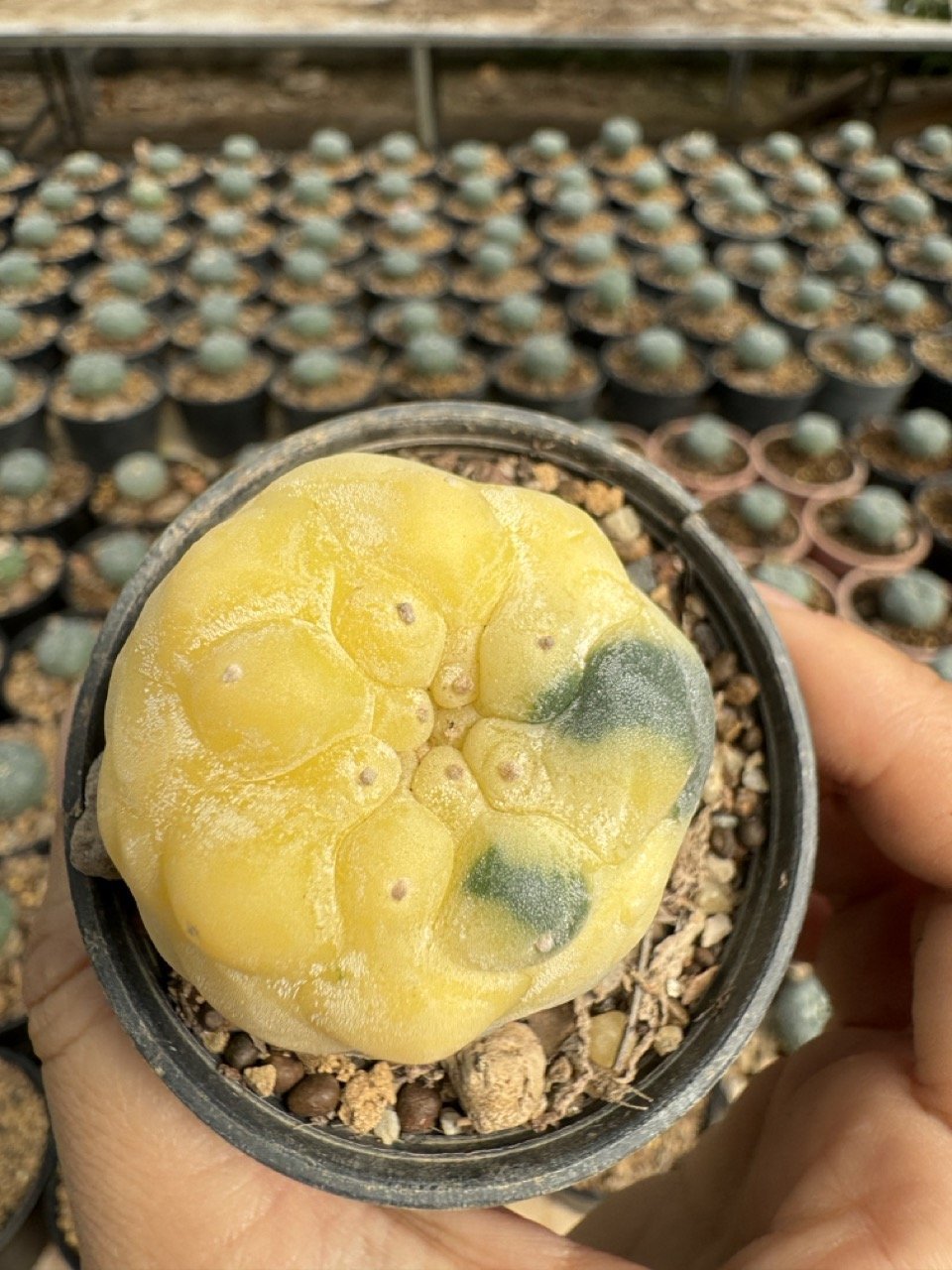
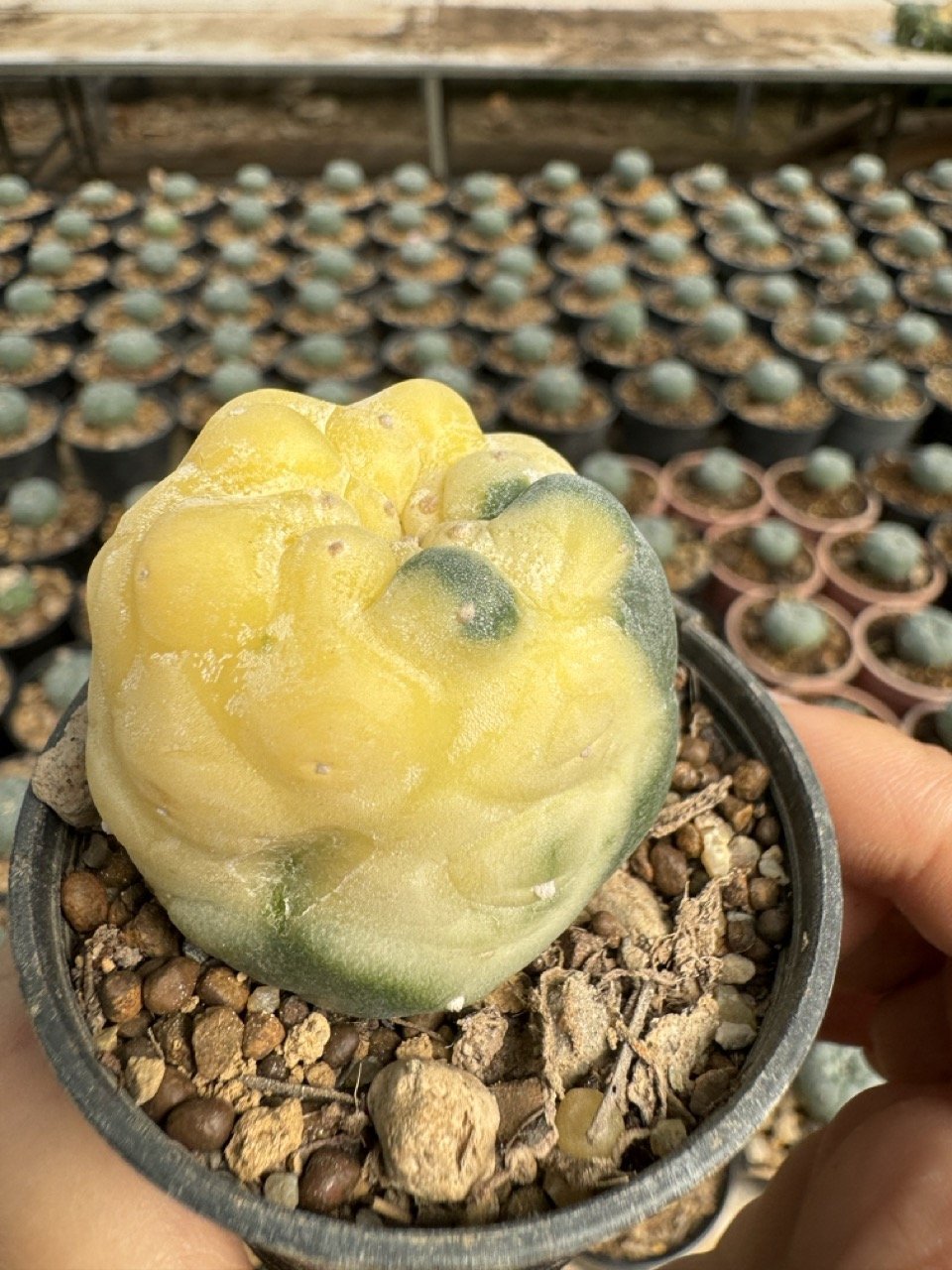
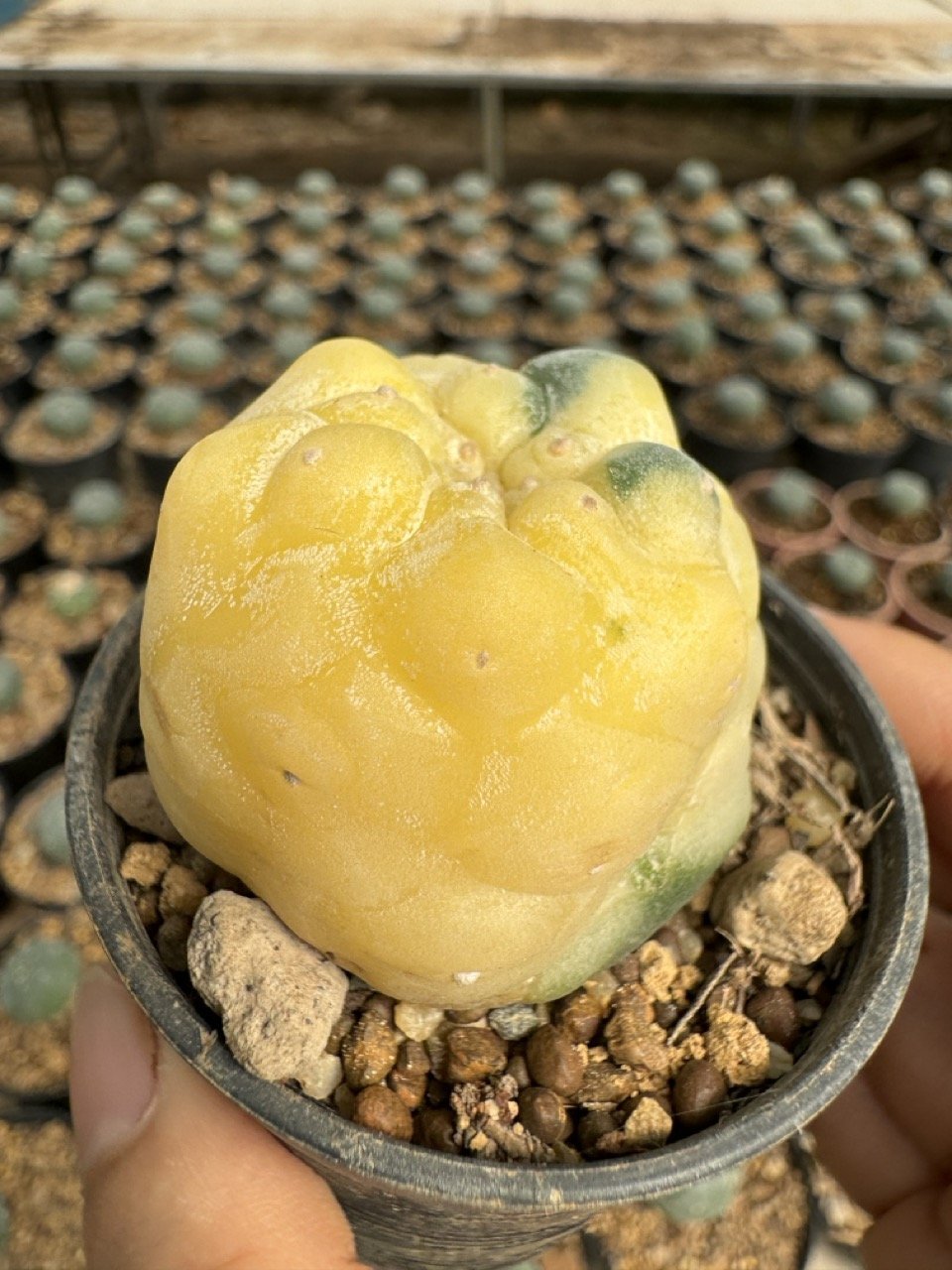
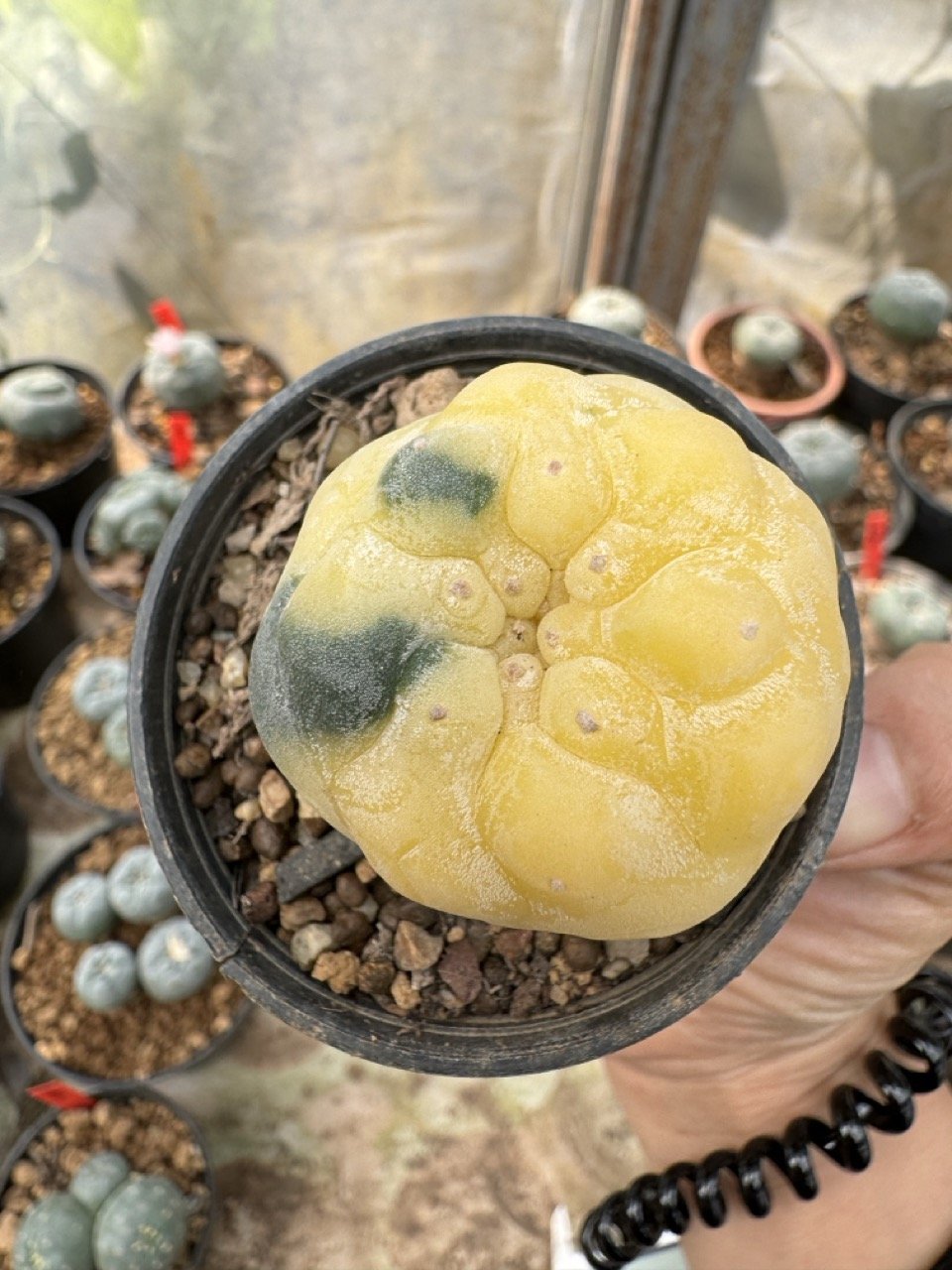
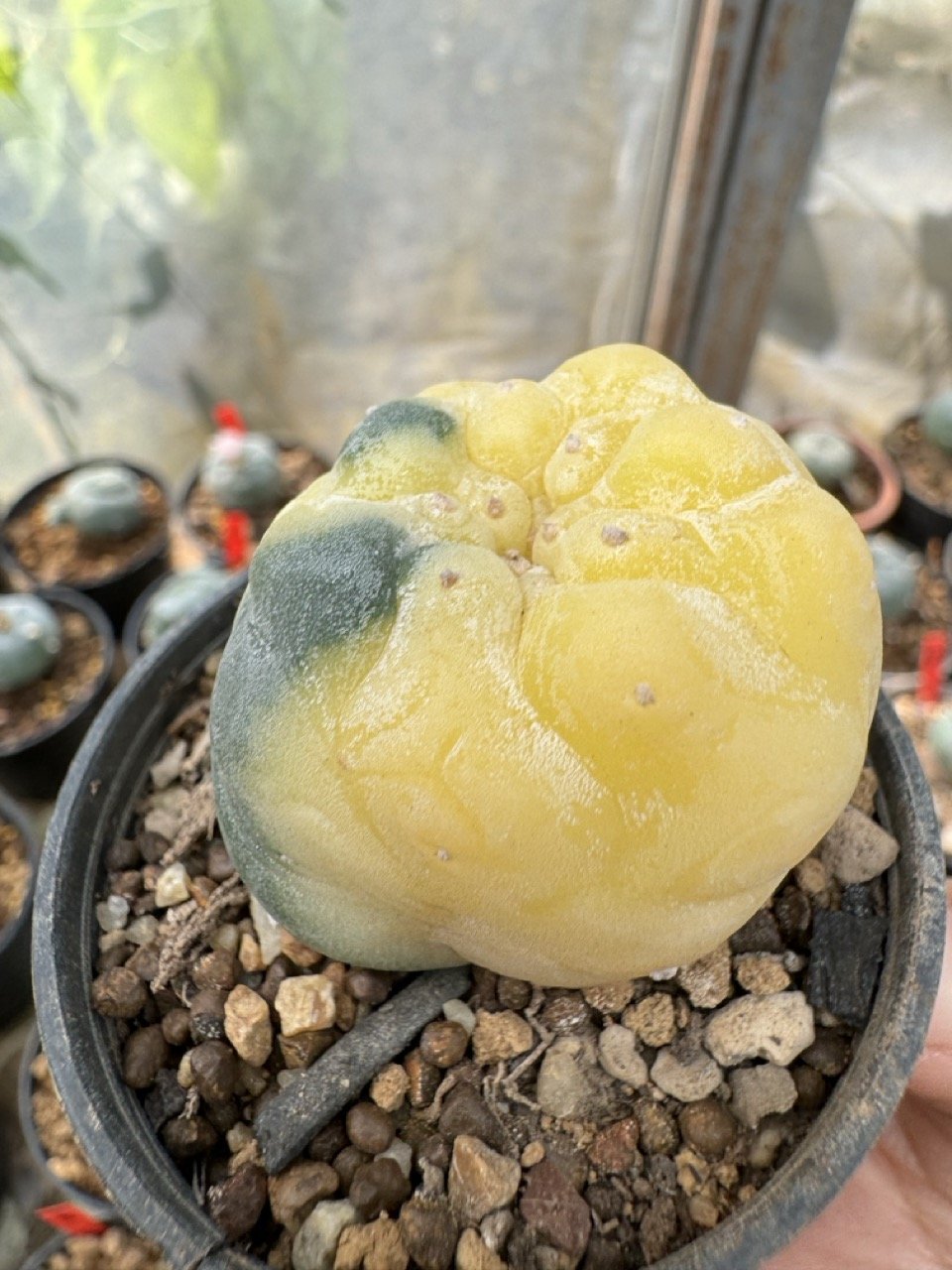
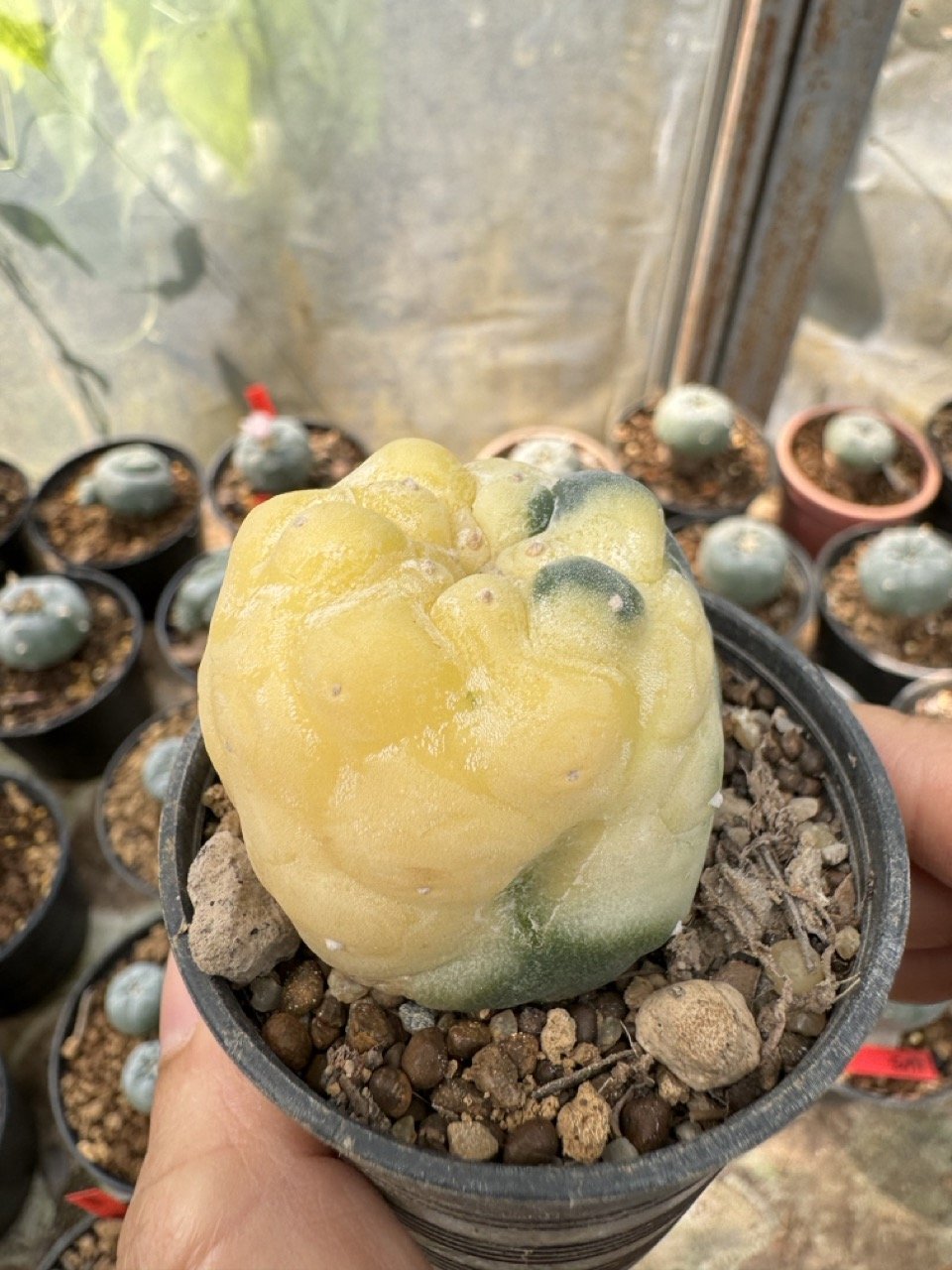
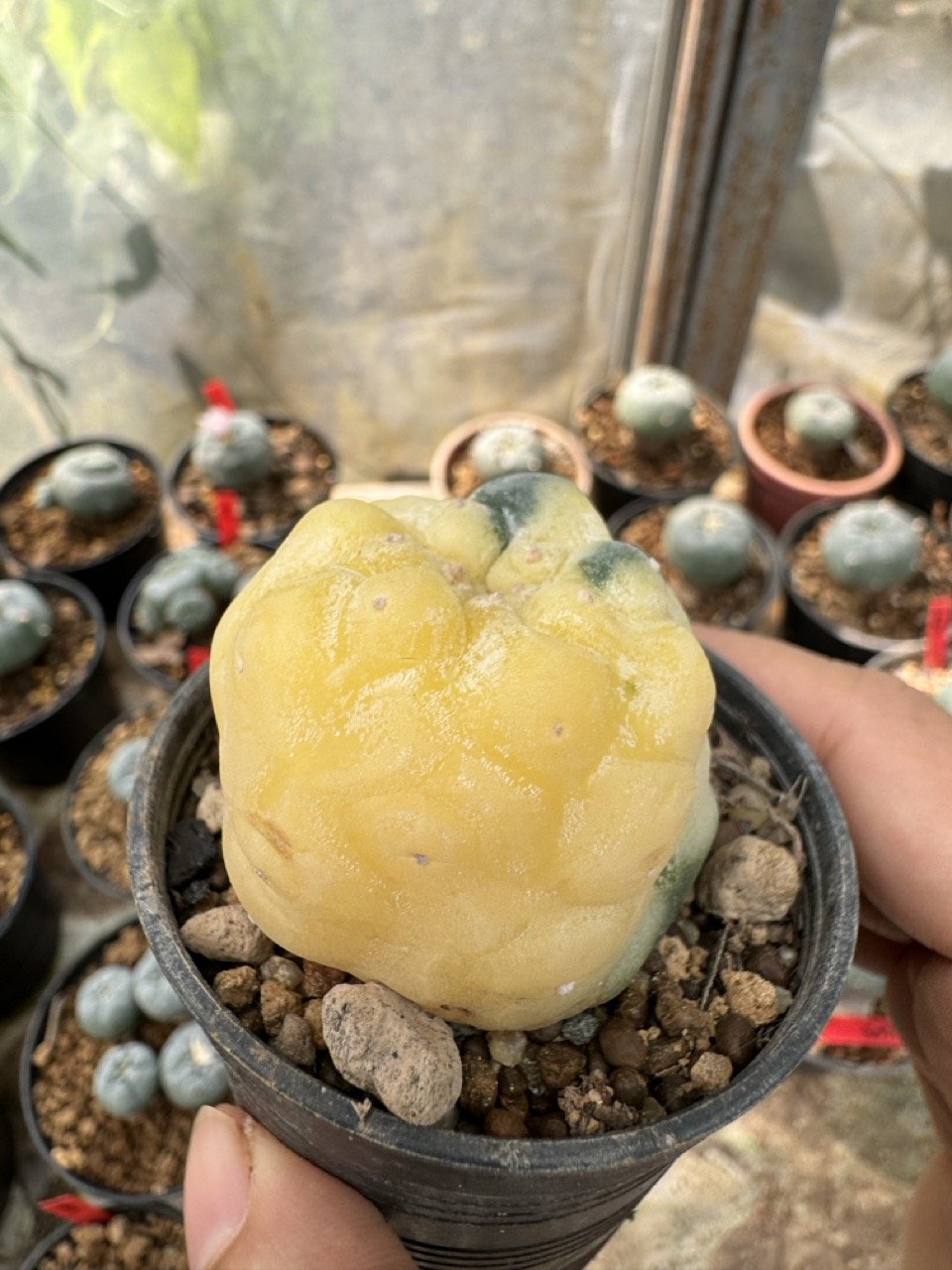
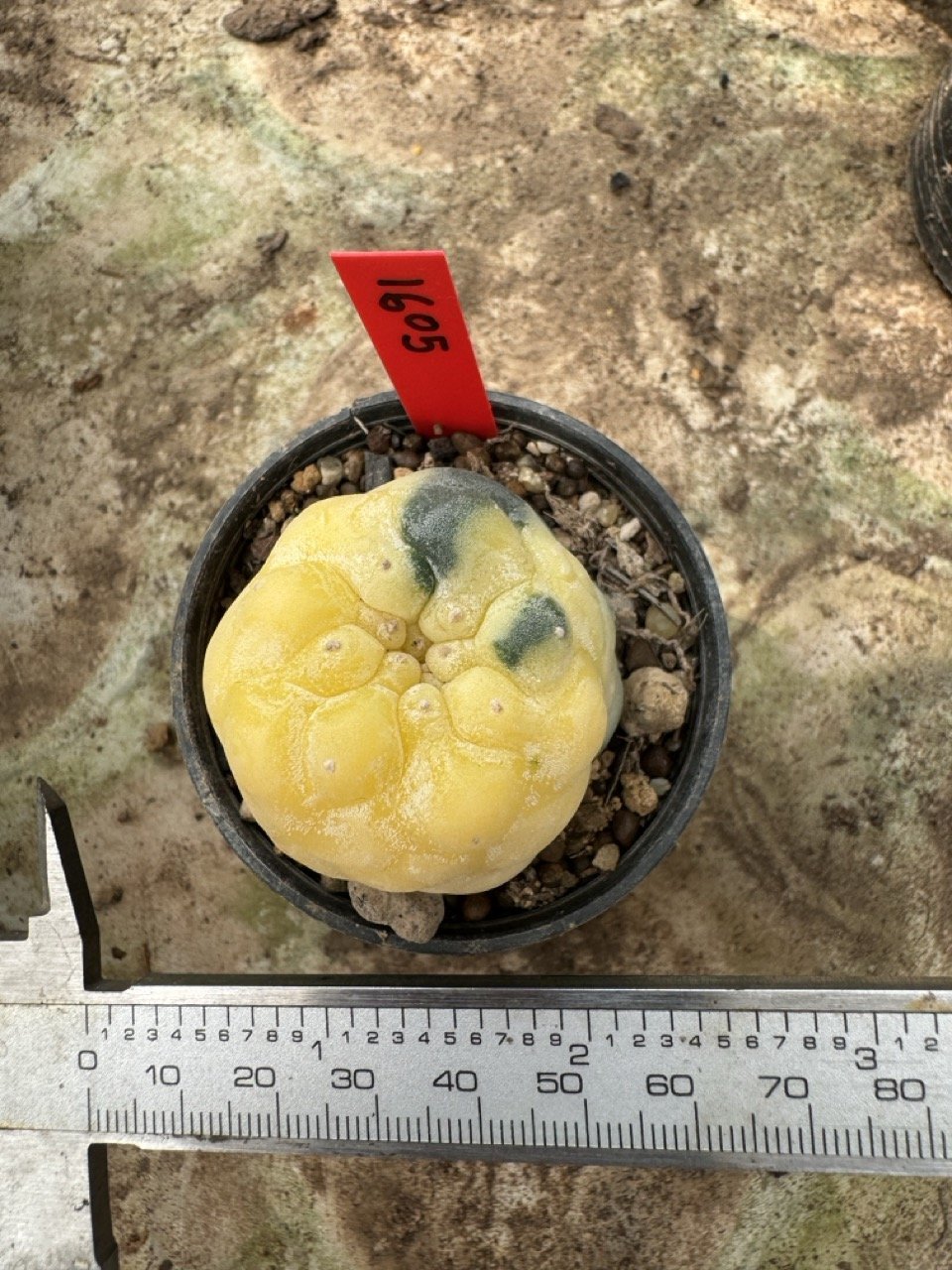
Lophophora Williamsii Variegata 5-6 cm
Lophophora Williamsii (Peyote Cactus) Premium Collector’s Guide
Discover the fascinating world of rare collector succulents with Lophophora williamsii, commonly known as the Peyote Cactus. This small, button-like, spineless perennial cactus is native to southern North America (Texas) and northern Mexico. Revered for its deep historical roots, unique geometric symmetry, and high ornamental value, it remains one of the most sought-after species among global cactus enthusiasts.
Key Varieties, Forms, and Growth Habits
The Lophophora williamsii complex is incredibly diverse, showcasing several distinct phenotypes, mutations, and horticultural cultivars:
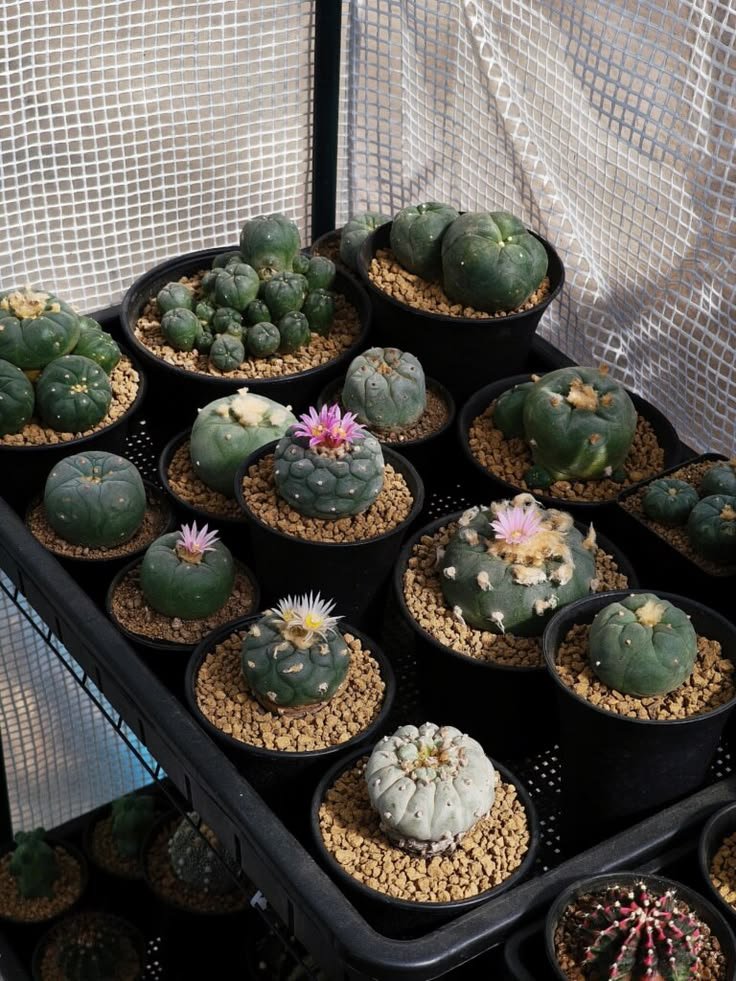
The Clumping Form (Lophophora williamsii var. caespitosa)
Derived from the Latin word meaning “growing in tufts” or “densely-clumped,” the Caespitosa variant is a unique clone characterized by its massive production of axillary shoots. Rather than staying solitary, these offsets layer over one another to form magnificent, multi-headed cushions. These are vegetatively reproduced and are frequently robust horticultural hybrids.
The Rare Variegated Mutation (f. variegata)
Variegated Lophophora are highly coveted gems in the cactus hobby. They display an unpredictable, striking contrast of spineless green flesh mixed with cream-yellow or pink striping.
-
Rarity: They appear purely by chance in tiny percentages of seedling batches and are immediately isolated by nurseries.
-
Growth Profile: Because variegated patches lack chlorophyll, these plants grow much slower, stay smaller, and are more sensitive to sunburn and fungal stress than standard specimens. Successfully growing a large variegated Peyote is considered a major crowning achievement for collectors.
Lophophora Williamsii Subspecies & Cultivar Reference Table
| Subspecies / Cultivar | Distinctive Morphological Features |
| L. williamsii (Standard) | Globular, glaucous-green body up to 12 cm wide with a woolly top and a massive underground taproot exceeding 25 cm. |
| L. williamsii var. caespitosa | Prolific clumping clone forming large, multi-headed mounds over time. |
| L. williamsii var. cristata | Rare mutation featuring beautiful, brain-like convoluted ridges. High ornamental value. |
| L. williamsii var. texana | Texas phenotype with grey pruinose stems and up to 14 flat ribs on mature heads. |
| L. williamsii var. jourdaniana | Displays deep rose-violet flowers and retains small, tiny spines on young areoles. |
| L. williamsii cv. Kikko | A highly distinct cultivar featuring sharp, prominent, pointed tubercles along its rib edges. |
| L. williamsii var. fricii | Known for producing noticeably large, intensely vibrant pink flowers. |
| L. williamsii var. pentagona | A strict local variation where every individual head grows with exactly 5 ribs. |
| L. fricii var. decipiens | Mirrors standard L. fricii but features smaller, more pale pink flowers. |
Expert Cultivation & Care Guide
Proper care mimics the harsh, arid environments of northern Mexico and Texas. Variegated and specialty cultivars require slightly more adjusted care:
-
Light Exposure: Provide a bright location with half-shade or heavily filtered sunlight. Avoid long exposure to scorching, direct summer afternoon sun, as variegated skin or sensitive specimens will sunburn and scar easily.
-
Soil & Substrate: Plant strictly in an open, highly mineral, free-draining cactus substrate. Avoid dense organic soils that trap moisture around the root zone.
-
Watering Routine: Water moderately during the active growing months (Spring to late Summer), allowing the soil mix to dry out 100% between waterings.
-
Winter Dormancy: Keep the plant completely dry and frost-free throughout the winter months. The cactus will naturally shrivel slightly, which is normal and healthy during cold storage.
escavator –
Before making a purchase, I contacted customer service on the website to confirm their recommendations for substrate and winter shipping. They provided concise, useful advice in a matter of hours. The specimen was sturdy, strong, and bare-rooted when it came. Five stars for customer service and plant quality